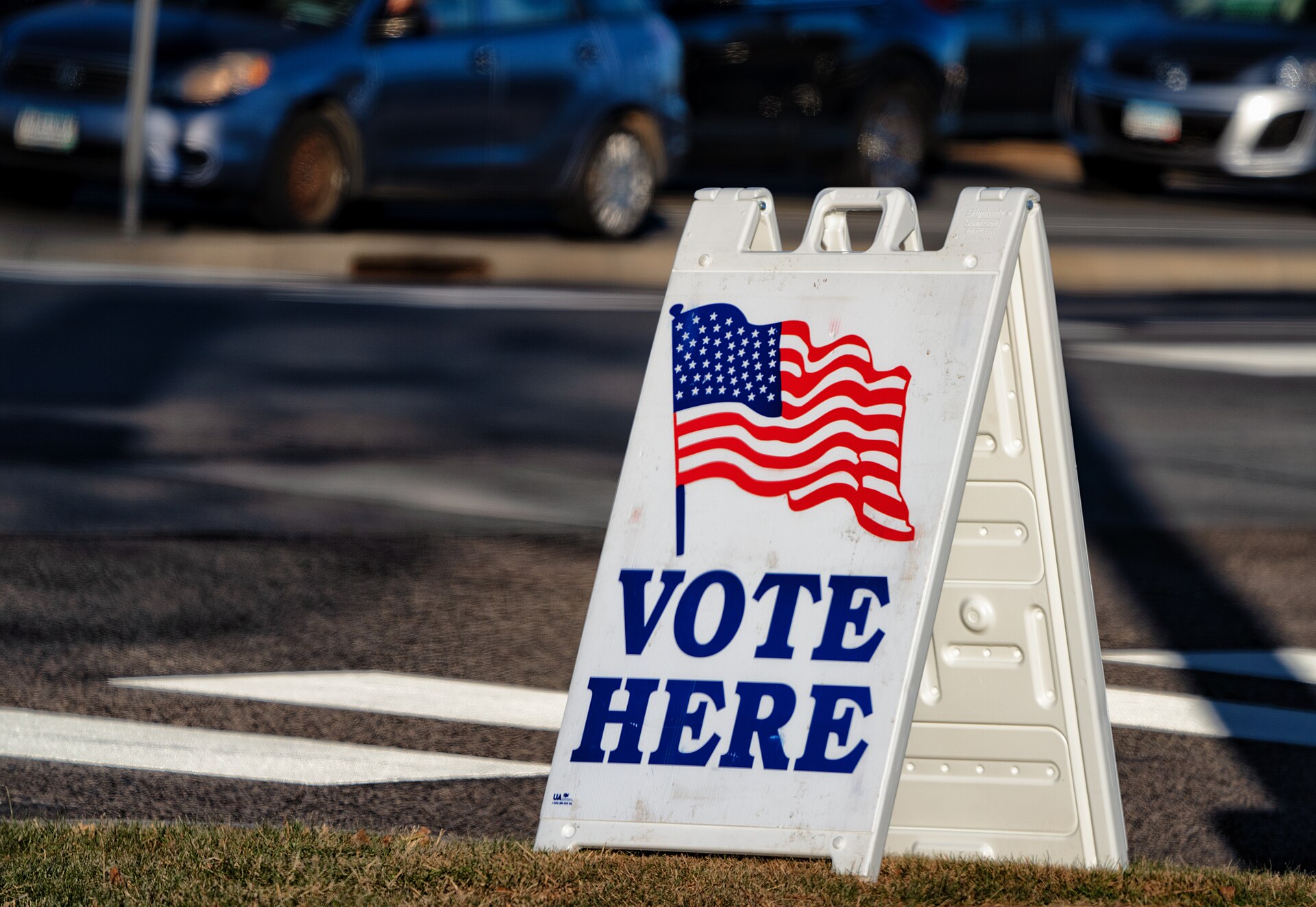
A “Vote Here” sign outside a polling place in Woodbury, Minnesota. Photo: Tony Webster from Minneapolis, Minnesota, United States / Wikimedia Commons, CC BY 2.0.
The Native American Rights Fund is deploying nearly 300 volunteers to polling places in seven states for the Nov. 3 general election, part of an effort to help Native voters overcome barriers at the ballot box, South Dakota Searchlight reported Oct. 14.
The volunteers will be stationed in South Dakota, Alaska, Michigan, Nevada, New Mexico, North Dakota and Wisconsin, states with significant Native populations and, in several cases, long histories of voting rights litigation.
“There are any number of steps where voters can encounter obstacles — and thanks to years of underfunded election infrastructure throughout Indian Country, Native voters are forced to confront more barriers than most,” said Jacqueline De León of NARF, according to the Searchlight.
The barriers
NARF examined those obstacles in an August report, “Obstacles Persist”. Voting rights advocates have long pointed to problems common on rural reservations: long distances to polling places and registration offices, a lack of standard residential addresses that complicates registration and mail voting, unreliable mail service, and identification requirements that do not always account for tribal IDs.
Voters who encounter problems can call the nonpartisan Election Protection hotline at 866-OUR-VOTE.
A century of barriers
Native Americans were not recognized as U.S. citizens by federal law until the Indian Citizenship Act of 1924, and several states continued to block them from voting for decades afterward. Arizona and New Mexico barred many Native people from voting until court rulings in 1948, and Utah did not fully end its restrictions until 1957.
Formal bars have given way to practical ones. The Voting Rights Act has been used repeatedly by tribes and Native voters to challenge district maps, the placement of polling places and voter identification rules. Those cases have frequently succeeded, but litigation takes years and typically covers a single county or state at a time, which is why advocates say on-the-ground monitoring on Election Day remains necessary.
Why it matters this year
The 2026 midterms include several races in which Native voters could be decisive, including U.S. Senate contests in Alaska and Minnesota with Indigenous candidates on the ballot.
For tribal nations, voting in federal and state elections is not a substitute for self-government, but it is a means of defending it. Congress and state legislatures make decisions every year about funding, jurisdiction and land that directly affect tribal sovereignty.
Sources: South Dakota Searchlight; NARF, “Obstacles Persist”.