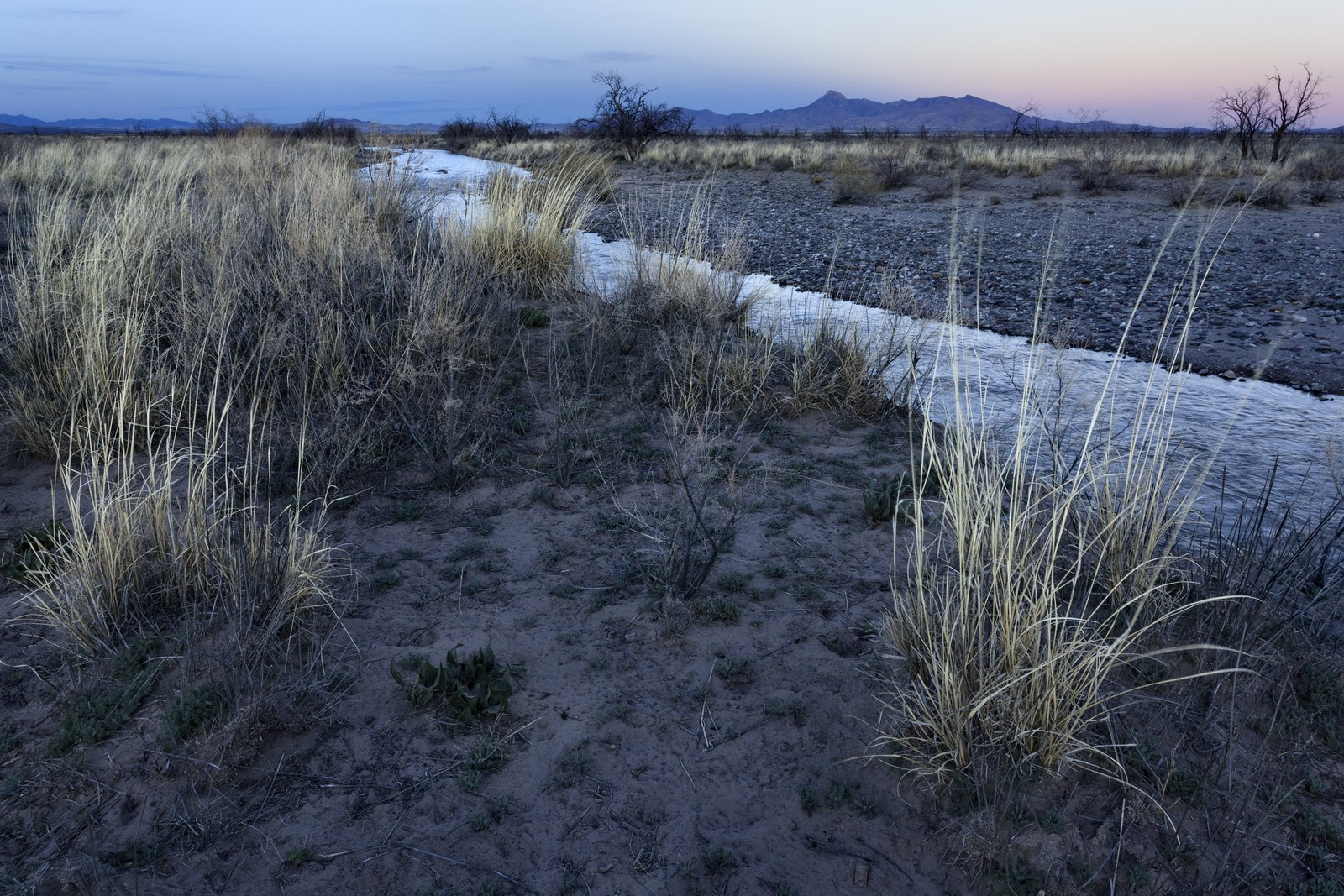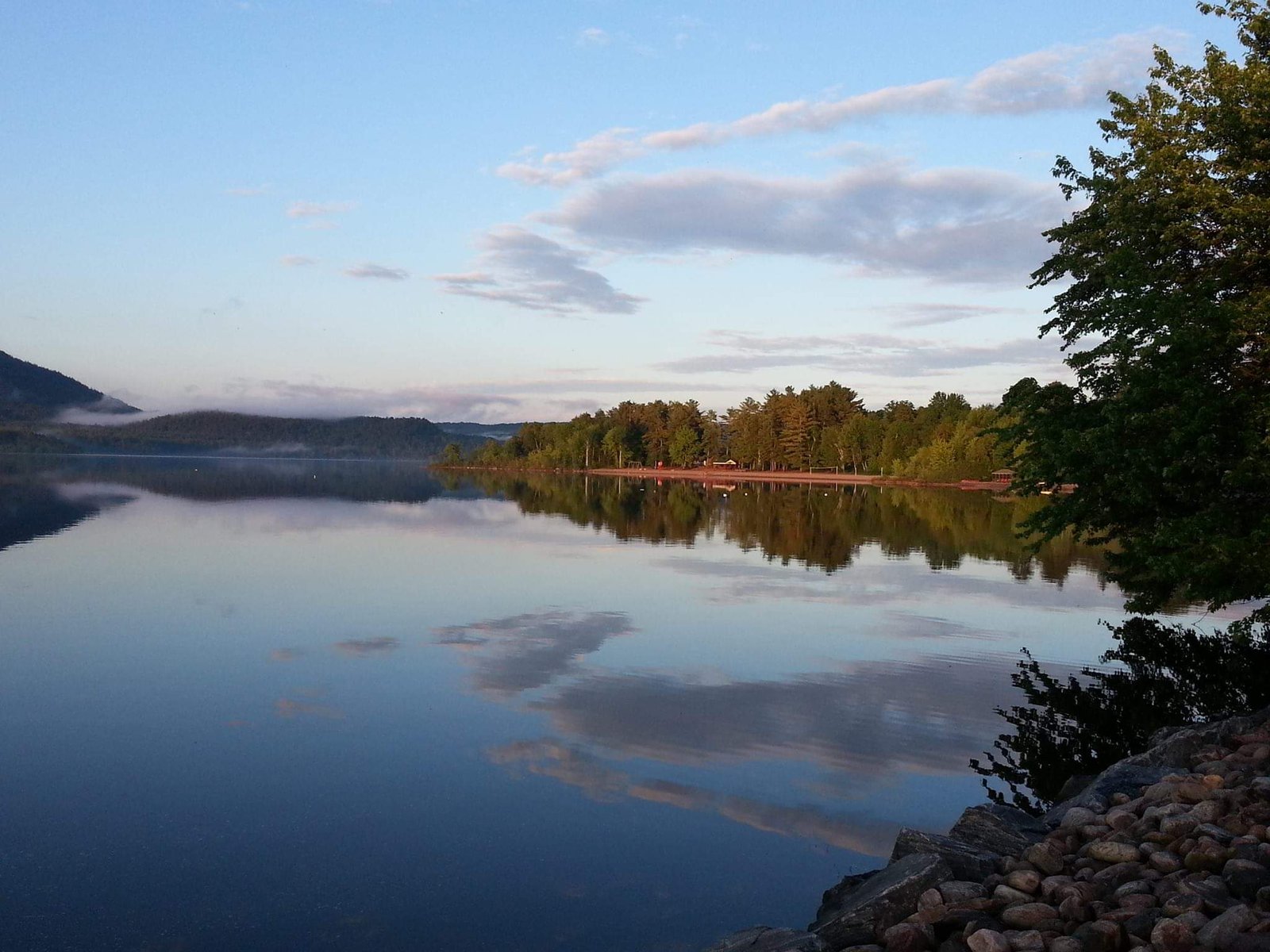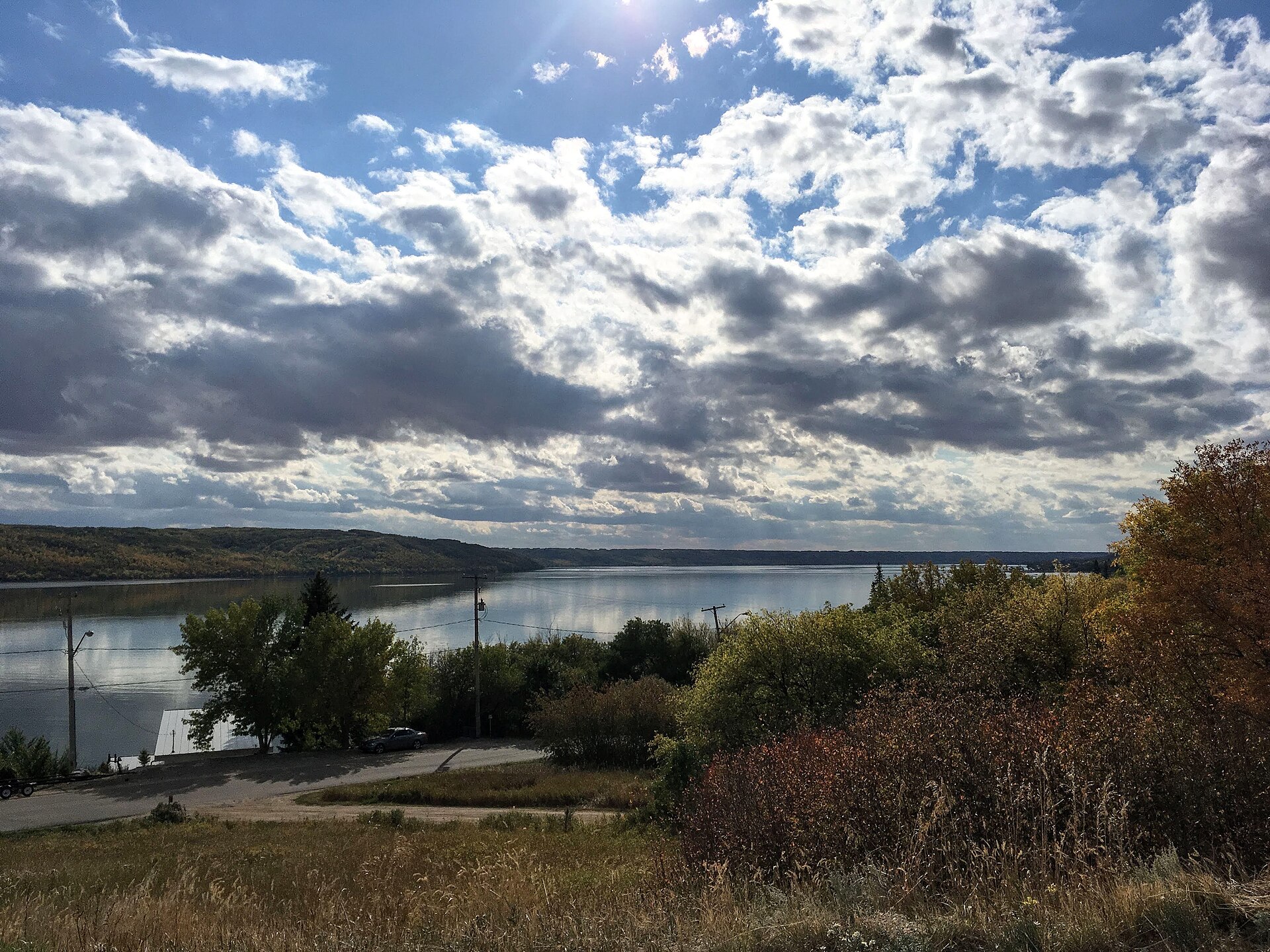
Pasqua Lake in Saskatchewan’s Qu’Appelle Valley, near Fort Qu’Appelle. Photo: Tyan Cherepuschak / Wikimedia Commons, CC BY-SA 4.0.
A Dakota nation in southern Saskatchewan is demanding that Bell Canada submit its artificial intelligence data centre near Regina to the nation’s own review process, after the company declined a request for formal consultation and said it would not hand over the technical reports, commercial agreements and regulatory correspondence the nation asked to see.
Standing Buffalo Dakota Nation, whose community lies just west of Fort Qu’Appelle, about 74 kilometres northeast of Regina, says the project site in the Rural Municipality of Sherwood, south of the city, sits within its unceded traditional territory. The nation has given Bell until Nov. 16 to confirm whether it will provide the information and take part in the nation’s review, CBC News reported Oct. 19.
“We’re operationalizing our sovereignty, our true sovereignty as a people,” Chief Rodger Redman told CBC. “In our own legislation, we determine the impacts ourselves. We don’t let government or industry determine that for us.”
Redman said the nation is also “preparing our litigation strategy.”
Bell: the province decides who is consulted
In a three-page letter that Standing Buffalo released to media on Friday, Oct. 16, Dan Rink, president of AI infrastructure and strategy at Bell AI Fabric, wrote that under Saskatchewan’s consultation policy the provincial government decides whether consultation with First Nations is required for a project, and with which communities, Eagle Feather News reported.
“Bell has carried out the consultation the Province asked of it for this project,” Rink wrote. He offered to meet Standing Buffalo’s chief and council at the Sherwood site, in Regina or in the community, but said the meeting would be for information sharing rather than formal Crown consultation, 980 CJME reported.
Many of the records the nation sought “are technical reports, commercial agreements, and regulatory correspondence,” Rink wrote, and “Bell does not release these outside the regulatory processes they were prepared for or the agreements that govern them.” Questions about Bell’s agreements with George Gordon Developments Ltd. “are best directed to GGDL,” he added. George Gordon First Nation is a partner in the project with Bell and the provincial government.
Bell confirmed the letter was authentic but declined CBC’s request for an interview.
On the environmental questions the nation raised, Rink wrote that the facility does not draw water from or discharge water to the aquifer, that its indoor and outdoor cooling loops are closed systems with no discharge, and that groundwater is monitored against established baselines, including at all neighbouring wells.
Standing Buffalo’s answer is that it cannot test those assurances without the underlying studies. “Our Elders and technical experts are preparing to assess this project,” Redman said in a statement quoted by CJME. “That work requires the relevant information, and we are asking Bell to engage directly with our process.”
The nation said any meeting with Bell “will be treated as information sharing. It will not replace the Crown’s consultation responsibilities, complete the Nation’s review, or constitute Standing Buffalo’s approval or consent.” It describes its published review process as a way of advancing free, prior and informed consent under the United Nations Declaration on the Rights of Indigenous Peoples.
No environmental assessment by any government
The province has called the data centre the largest private-sector investment in Canadian history, bringing $52 billion in investment, up to 1,200 construction jobs and 600 permanent jobs, CBC reported Oct. 7.
No government has conducted an environmental impact assessment of the current campus. Saskatchewan’s Ministry of Environment told the Regina Leader-Post that it did not do one, saying “not all projects require an environmental assessment,” and Bell has described doing a “self-assessment” of concerns such as drainage and noise. The federal Impact Assessment Agency of Canada declined two requests in June to designate the project for federal review, finding that physical work had “substantially begun.” The agency’s project page describes a 300-megawatt facility on a 65-hectare agricultural site.
Bell says a proposed expansion still requires rezoning and a provincial environmental impact assessment that would include public comment, according to CJME.
Other nations raise alarms
Standing Buffalo is not alone. Carry the Kettle Nakoda Nation, whose main reserve is about 90 kilometres east of the site, has called on Saskatchewan, Canada and Bell to pause construction “until a proper environmental assessment is complete and our Nation is consulted and accommodated in accordance with the Treaty,” paNOW reported.
“We see drought conditions. We have an aquifer under our reserve to protect. We don’t know where the water is coming from, and we don’t understand the impacts,” Chief Cliff Thomson wrote in a letter earlier this month, according to CBC.
Redman has argued that a partnership with one nation cannot discharge the Crown’s obligations to others. “There’s 74 Nations in Saskatchewan. And none of those 74 that I know of have delegated George Gordon to speak on their behalf,” he told CBC.
Consultation without a treaty
Standing Buffalo is not a signatory to Treaty 4, though it is protected under the Indian Act. That does not erase the Crown’s obligations: in Haida Nation v. British Columbia (2004), the Supreme Court of Canada held that the duty to consult can arise before Aboriginal rights or title have been proven in court. The nation issued a sovereignty declaration in 2023 asserting its right to govern itself, and Redman says it is already in Federal Court litigation over its asserted right to be consulted.
The dispute tests a question now arriving across North America as AI infrastructure spreads onto rural land: whether Indigenous nations will be treated as governments with jurisdiction over their territories, or as neighbours to be briefed after the concrete is poured. Standing Buffalo has put its position in writing. Bell has until Nov. 16 to answer it.