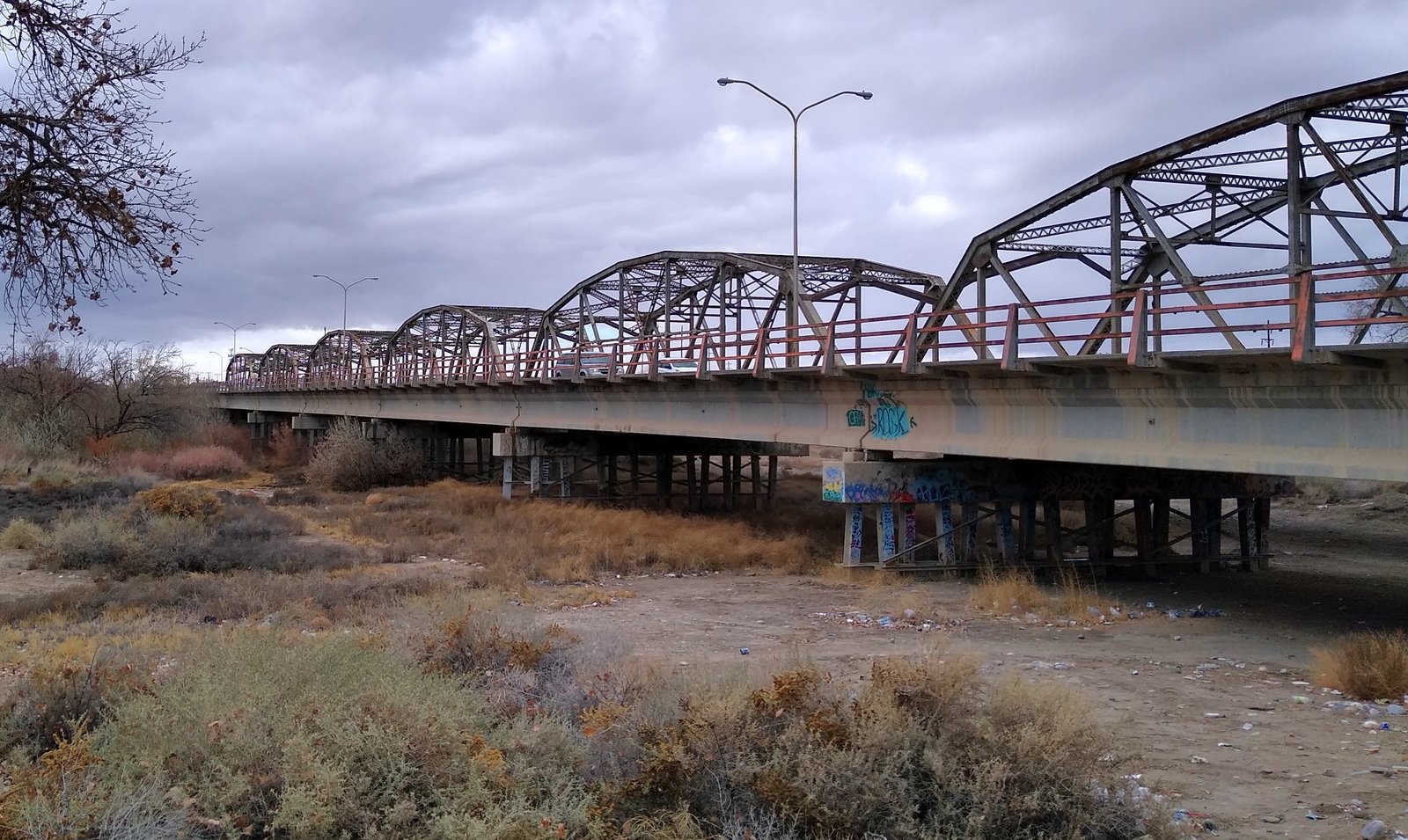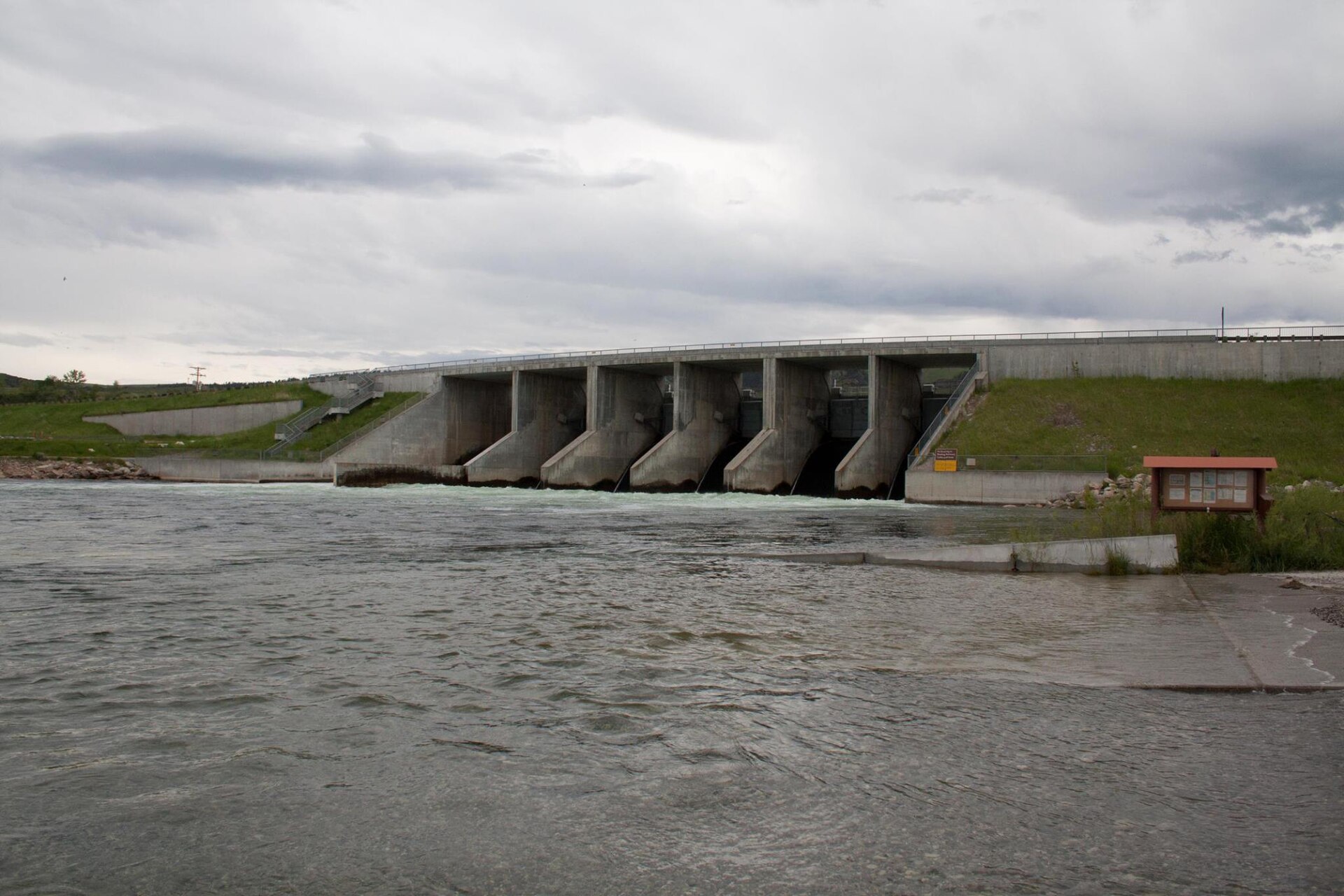
The Yellowtail Afterbay Dam on the Bighorn River near Fort Smith, Montana, on the Crow Reservation. Photo: U.S. Bureau of Reclamation / Wikimedia Commons, CC BY-SA 2.0.
The Apsáalooke (Crow) Nation in south-central Montana will design and build its own drinking water infrastructure under a law President Donald Trump signed Oct. 15, ending a 16-year attempt to deliver a single, federally planned water system that Congress itself concluded could not be built as designed.
The Crow Tribe Water Rights Settlement Amendments Act, now Public Law 119-122, rewrites the 2010 settlement of the tribe’s water rights claims so that money for municipal and rural water goes into a tribal account rather than to a Bureau of Reclamation construction project, according to the enrolled text. The White House said the law gives the tribe “more flexibility to complete certain water projects.”
“Today’s legislation unties the Tribe’s hands and allows us to use previously appropriated funds to construct a more efficient system of regional water treatment and improved wells,” Crow Chairman Frank White Clay said in a press release quoted by the Billings Gazette.
A settlement that stalled
The Crow Tribe Water Rights Settlement Act of 2010, enacted as part of the Claims Resolution Act, ratified the water compact the tribe and Montana signed in 1999. It authorized $460 million for the tribe to build a municipal, rural and industrial (MR&I) water system, rehabilitate the Crow Irrigation Project and develop energy projects, including hydropower at the Yellowtail Afterbay Dam, according to the Senate Committee on Indian Affairs report on the bill. In exchange, the tribe, its allottees and the United States as trustee gave up future water rights claims within the 2.3-million-acre reservation.
But “the complexity of the project design, increased construction costs, and current assessments of the future burden of operational costs to Crow Tribal members has made the CTWRSA’s water system, as designed, infeasible,” the committee wrote. The fix, it said, was to convert the deal “from a project-based to a fund-based settlement.” The committee stressed that the bill “does not reopen” the settlement or the compact and does not alter existing water rights.
Rep. Troy Downing, R-Mont., who carried the bill in the House, told the Gazette that the original plan for a centralized system had produced a “standstill.” The amendment “allows them to actually right-size it for the tribe in smaller sections that are more appropriate for the tribe,” he said.
What the law changes
Under the enrolled text, the law:
- Repeals the section of the 2010 act that provided for a single MR&I System designed and built under agreements with Reclamation, and replaces it with “MR&I Projects.”
- Creates an MR&I Projects Account within the Crow Settlement Fund. The tribe must use it first to plan, permit, design, build, rehabilitate, operate or repair water production, treatment, delivery and wastewater infrastructure, and to comply with environmental laws for that work.
- Allows the tribe, once it notifies the Interior Secretary that on-reservation water projects are complete, to use any remaining money to buy on-reservation land with water rights.
- Provides that title to, control over and operation of anything built with the account “shall remain in the Tribe.”
- Extends the tribe’s exclusive right to develop hydropower at the Yellowtail Afterbay Dam from 15 to 20 years, which the Congressional Research Service summary says runs to 2030.
The law also states that “the Federal Government shall have no obligation to pay for the operation, maintenance, or replacement of any MR&I Project.”
Why the water matters
The need is measured at the kitchen tap. More than 39% of household wells on the reservation have exceeded safe drinking levels because of contaminants such as uranium, manganese, arsenic and nitrate, the Gazette reported, and in 2012, 57% of homeowners’ wells were considered to pose health risks.
Sen. Steve Daines, R-Mont., who introduced the bill with Sen. Tim Sheehy, R-Mont., in January 2025 at the tribe’s request, said it “will ensure the tribe has the resources they need to deliver safe, reliable access to clean water to the reservation and complete a hydropower project to bring new baseload generation to the region.” A similar bill introduced in 2024 by then-Sen. Jon Tester, D-Mont., and Daines cleared the Indian Affairs Committee but did not become law.
Sovereignty, and its bill
Water settlements are among the most consequential nation-building tools available to tribes in the arid West. They quantify rights that predate the states and pay for the infrastructure to use them. But a settlement is only as good as its implementation, and for 16 years the Crow plan was tied to an engineering design that the parties now concede could not be built or affordably run.
The amendments move decisions to the Crow Nation, which will set its own sequence of regional treatment plants and wells. That is self-determination in practice. They also move risk: the law makes explicit that the federal government will not pay to operate, maintain or replace what the tribe builds, even though the Indian Affairs Committee identified operating costs to Crow citizens as one reason the original system failed. Whether the remaining settlement dollars are enough to deliver clean water to every Crow household, and to sustain those systems, will decide whether the promise of 2010 is kept.
Montana’s work is not finished. Downing told the Gazette he hopes to pass the Northern Montana Water Security Act before the end of the year. It would establish a water settlement for the Fort Belknap Indian Reservation, which he described as the last reservation in the state without one.