By Tessa Monroe, Tewatati
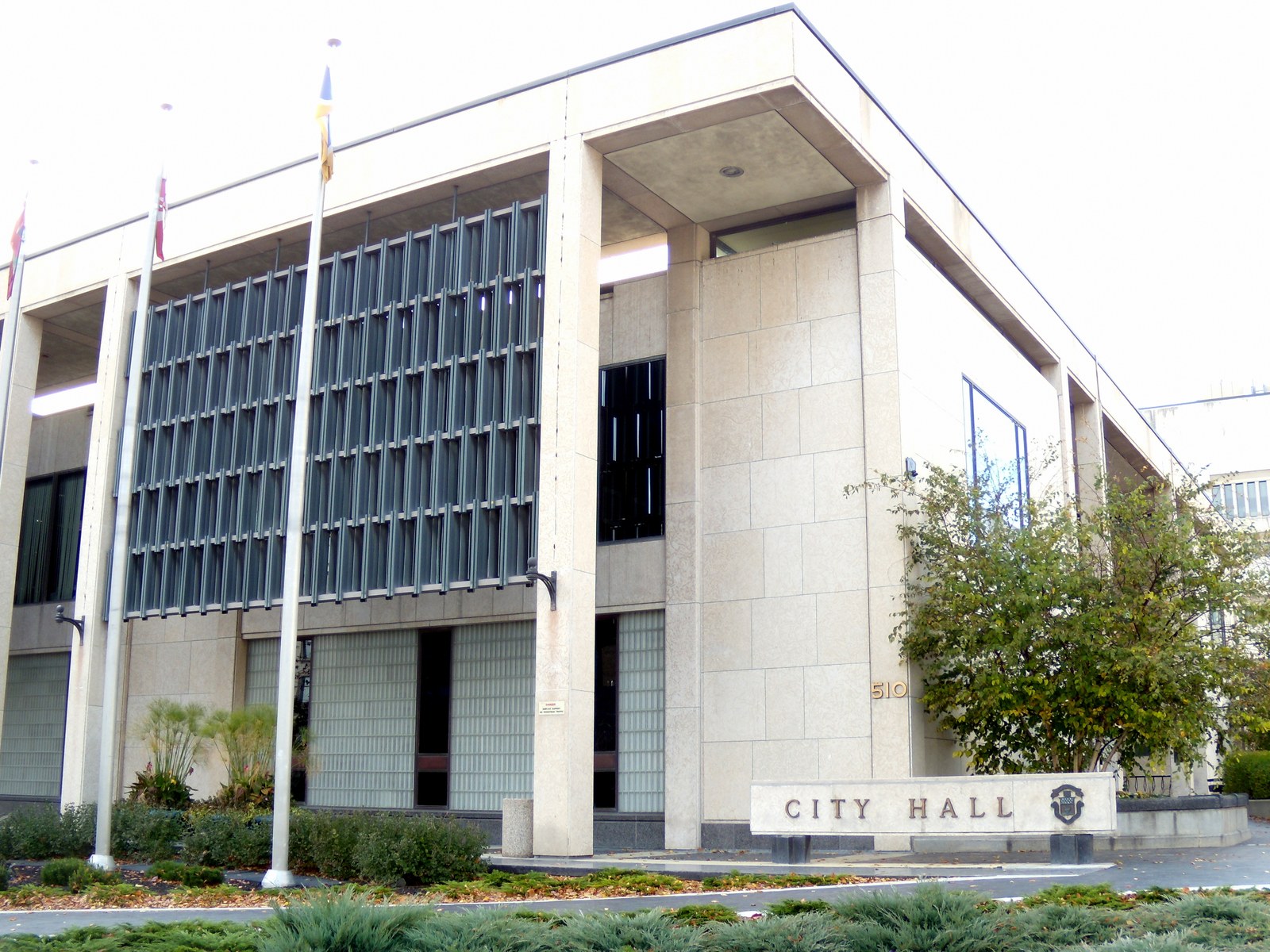
Winnipeg City Hall (2012). Photo: Ccyyrree / Wikimedia Commons, CC0 1.0 (public domain dedication).
When First Nations leaders put their first question to Winnipeg’s mayoral candidates this week, it was not about a program or a grant. It was about a road.
Speaking for the Treaty One Nations at an Oct. 20 forum in the basement of the Manitoba Museum, Sagkeeng Anicinabe Chief E.J. Fontaine asked all 12 candidates about a proposal to widen Kenaston Boulevard beside Naawi-Oodena, the former Kapyong Barracks site that the seven Treaty One Nations are turning into an urban reserve with homes and businesses, CBC News reported. The forum was hosted by the Assembly of Manitoba Chiefs, the Southern Chiefs’ Organization, Manitoba Keewatinowi Okimakanak and Treaty One Nations, and drew about 85 people. Winnipeggers vote on Wednesday, Oct. 28.
The question goes beyond traffic. Naawi-Oodena is reserve land held by First Nations governments inside city limits, and how fast it can grow depends in part on roads, bridges and pipes that the city controls. The next mayor’s answer on Kenaston will be an early test of whether city hall plans that growth alongside the Treaty One Nations as a partner government.
A reserve in the heart of the city
The barracks were used by the Canadian Armed Forces until 2004. First Nations with outstanding treaty land entitlement claims challenged Ottawa’s plan to sell the surplus Crown land, and in 2015 the Federal Court of Appeal agreed that the federal government had failed to adequately consult Treaty 1 First Nations, CBC reported at the time. A 2019 settlement provided for the sale of 68% of the property to the Treaty One First Nations, with the rest going to Canada Lands Company.
On Dec. 16, 2022, after nearly two decades of negotiation, the land was formally converted to reserve held jointly by Brokenhead Ojibway Nation, Long Plain First Nation, Peguis First Nation, Roseau River Anishinabe First Nation, Sagkeeng First Nation, Sandy Bay Ojibway First Nation and Swan Lake First Nation. Naawi-Oodena means “Centre of the Heart and Community” in Anishinaabemowin.
The 109 acres are filling in. The first business, Oodena Gas & Convenience, opened in June 2025, and federal support for planning, training and site development had reached about $5.5 million by last summer, according to Treaty One Nations. In March, Ottawa and Treaty One announced Endayaan Omaa (“Home is Here”), a $91-million apartment building with 260 homes, 109 of them at below-median rents, due in 2028, according to the Canada Mortgage and Housing Corporation. The full site, including the portion managed by Build Canada Homes, is expected to hold about 5,000 homes.
“Naawi-Oodena is about Nation-building in action,” Treaty One chairperson Chief Gordon BlueSky said in March. “We have reclaimed these lands with the intention of leading development.”
The $757-million question
The Route 90 plan would widen Kenaston to three lanes in each direction between Taylor and Ness avenues, replace the St. James bridges, separate aging sewer pipes and add active-transportation paths. It is expected to cost $614 million plus $143 million in interest if the city finances it entirely through debt, the Winnipeg Free Press reported last fall, when council voted 11-2 to set aside $5 million to begin acquiring property. More than 100 properties may be fully or partly acquired, CBC reported. At the time, the city had no funding commitment from the province or Ottawa, CityNews reported.
Mayor Scott Gillingham has tied the project to Naawi-Oodena from the start. “This is not an induced demand, this is an inevitable demand,” he said after that vote. At the forum, he called Kenaston his second infrastructure priority. “To accommodate the capacity and the growth of that exciting development at Naawi-Oodena, we need to accommodate that through widening that road,” he said, adding that the bridges near the Viscount Gort Hotel “only have a few years of life left in them.”
Kevin Klein said the work was not moving fast enough. “This is going to be an historic piece of land in Canada,” he said. “My fear is that we don’t start working on the road for another five years.”
Brad Gross, Tracey Drexler, Umar Hayat and Chris Clacio also backed widening. “When we talk about ‘land back’ in urban centres like Winnipeg it can’t just be a slogan, it must be a concrete municipal policy,” Drexler said. Johnny Calderon said more lanes would likely be needed. Michael Vogiatzakis promised “an open-door conversation” with First Nations on how to build Route 90 “together.”
A few candidates put transit first. Noah Redden, a longtime opponent of the expansion, said “in the interest of reconciliation, I am willing to be a little more flexible on that. I would propose that we increase the amount of transit options to Naawi Oodena,” according to Frequency. Mazher Alam wants bus rapid transit expanded before any widening, Joshua Pagdato said the money could be better spent elsewhere, and Don Woodstock asked how the city could expand the road “without the heavy cost” while letting First Nations “be a part of it.”
That skepticism has a voice on council. Coun. Emma Durand-Wood (Elmwood-East Kildonan), one of two councillors who voted against last fall’s funding, told Tewatati this week that her position has not changed. She wrote that she opposes the widening but not the bridge, road rehabilitation and sewer work, and that the widening accounts for roughly a third of the project’s cost, with the city’s share to be funded by debt. “Given our current 10-year, $8 billion infrastructure deficit, borrowing more money to add infrastructure while we can’t even keep up with the minimum maintenance of our existing infrastructure is a complete non-starter for me,” she wrote.
Durand-Wood, who described herself as a signatory to the Winnipeg Indigenous Accord, called for more funding for Indigenous-led community organizations and housing instead. “We don’t need to widen Kenaston to prioritize very good transit in the vicinity of Naawi Oodena; a dedicated transit lane with high frequency bus service is something we could implement within existing capacity if we chose to.”
Beyond the road
Manitoba Keewatinowi Okimakanak Grand Chief Garrison Settee asked about Indigenous residents’ safety and negative interactions with police and security guards, including assaults in retail settings. Redden repeated his support for a fourth 911 option for mental health and addictions calls; Calderon proposed hiring Indigenous Elders to help de-escalate; Klein proposed a community safety task force with Indigenous leadership. Gillingham said council unanimously backed steps toward a community crisis response in September. “Ten thousand calls every year could be diverted away from police, fire, paramedic, and better handled by mobile crisis workers. … Some of them are Indigenous-led,” he said.
Assembly of Manitoba Chiefs Grand Chief Kyra Wilson framed the evening around presence as much as need. “Our First Nations citizens are an important part of Winnipeg,” she said. “Our families, elders, youth, entrepreneurs, and leaders contribute to the strength, growth, and success of the city every single day.”
Treaty One Nations, the Southern Chiefs’ Organization, the Assembly of Manitoba Chiefs, Manitoba Keewatinowi Okimakanak, the Gillingham and Klein campaigns and Indigenous Services Canada did not respond to requests for comment by publication time.
Tessa Monroe covers urban Indian communities for Tewatati.