By Henry Calloway, Tewatati
This is Part 6 of Section 106 Under Pressure, Tewatati’s series on proposed changes to the National Historic Preservation Act. Earlier parts covered what the bill would change, the Tribal preservation offices it would put on a federal clock, the federal preservation council’s stalled rule and the Tribal leaders who lobbied before the vote.
The U.S. Senate voted 73-25 on Monday evening to move ahead with the permitting package that carries a rewrite of Section 106, the part of the National Historic Preservation Act that requires federal agencies to consult Tribal Nations before approving projects that could harm historic, cultural and sacred places.
The vote was on cloture on the motion to proceed to H.R. 2347, the House-passed bill senators are using as the vehicle for the Bipartisan American Affordability and Jobs Act, or BAAJA. It needed 60 votes, according to the official roll call.
The vote does not pass the bill. The Senate was set to return at noon Tuesday, in post-cloture time on the motion to proceed, according to the Senate Daily Press. If the bill passes the Senate, it still needs House approval.
Tribal organizations had asked senators to vote no. In a statement on Sunday, the National Congress of American Indians called on the Senate “to vote NO on cloture on S. 5653, remove Title III in its entirety, and commit to a transparent, good-faith legislative process in the next Congress.”

How senators voted
Republicans voted 51-1 to proceed; the lone Republican no was Sen. Mike Rounds of South Dakota. Democrats split, 21 in favor and 23 against. The two independents also split: Angus King of Maine voted yes, and Bernie Sanders of Vermont voted no.
All four sponsors voted yes: Republicans Shelley Moore Capito of West Virginia and Mike Lee of Utah, and Democrats Sheldon Whitehouse of Rhode Island and Martin Heinrich of New Mexico. So did Indian Affairs Committee Chairman Lisa Murkowski (R-Alaska) and Vice Chairman Brian Schatz (D-Hawaii). New Mexico’s other senator, Ben Ray Luján, voted no, as did both senators from Washington, Oregon and California.
Sen. Catherine Cortez Masto (D-Nev.) supported opening debate but said she would oppose final passage unless the National Historic Preservation Act provisions are removed, citing tribal concerns, Reuters reported.
The sponsors’ case
“The environmental permitting and review processes should be tools for informed decision-making, not reasons that decisions can’t be made,” Capito said on the floor before the vote, according to her prepared remarks.
According to Reuters, Heinrich said the weekend changes strengthened tribal protections by requiring agencies to consult tribes throughout the permitting process. “We worked to strengthen that dramatically,” he said. Whitehouse argued against waiting for the next Congress: “This bill is the floor, not the ceiling, of our climate and environmental aspirations.”
On the West Lawn
Hours earlier, the 106 Strong coalition rallied on the West Front Lawn of the Capitol. About 800 people attended, and representatives of more than 100 Tribal Nations took part in the rally and in meetings with lawmakers, the coalition said in a release posted after the vote.
“Indian Tribes must be part of the Section 106 process to ensure that we can honor our duty to avoid, or at least minimize, impacts to our ancestors’ graves, archaeological sites, and cultural landscapes,” Suquamish Tribe Chairman Leonard Forsman, president of the Affiliated Tribes of Northwest Indians, said from the podium, according to the release. “Permitting reform must support Tribal sovereignty and protect Tribal cultural heritage. These priorities are not mutually exclusive.”
Greg Werkheiser of Cultural Heritage Partners, a leader of the coalition, closed the program: “Our history belongs to all of us. And all of us deserve a voice in its future.”
What is still in Title III
The substitute text the four sponsors released Saturday, which Tewatati reviewed, drops two provisions Tribes had opposed most strongly: a new federal definition of a sacred place, and a requirement that the Interior Secretary take over a Tribal Historic Preservation Office’s functions after two years of noncompliance.
Much of the rest remains. Interior would still evaluate Tribal preservation programs at least every two years and could suspend their contracts and grants if a program’s officer does not “complete consultation expeditiously, or meet required metrics.” A federal official could still decide, in the official’s “sole discretion,” that “other considerations outweigh the consideration of historic preservation.” Visual, atmospheric and audible effects would still be largely excluded from the definition of an adverse effect. If a Tribal office misses a deadline, the agency could consult the Advisory Council on Historic Preservation “in lieu of” that office.
Reaction after the vote
The National Association of Tribal Historic Preservation Officers condemned the vote Monday evening. “The four Senators who wrote this bill behind closed doors did so without consulting Tribal Nations, and it shows,” Executive Director Ira L. Matt (Séliš) said in a statement. “BAAJA represents a legislative assault on Tribal sovereignty and a violation of the United States’ trust responsibilities to Tribal Nations.” The group again called on senators “to remove the historic preservation title from BAAJA and craft new language in consultation with Tribes.”
In its post-vote release, 106 Strong said that as Whitehouse argued on the floor that the deal would ease the administration’s opposition to clean energy, President Trump told a press conference he would not approve wind turbines. “The President, in real time, made major fools of certain Democratic Senators, who have told Americans that sacrificing history and culture in this bill is necessary to win clean energy concessions from the President,” Werkheiser said.
Ben Schifman of the Institute for Progress, a think tank that supports the bill, pointed Tewatati to his updated analysis of the substitute. It concludes that “on balance, the amended bill is more favorable to Tribal interests than the realistic alternative,” an Advisory Council rule that would “radically scale back Tribal involvement.” It says the substitute requires Tribal review of every agency finding and extends the time to object from 30 to 45 days, while acknowledging that some of the bill’s changes “reduce Tribal influence over projects off of Tribal lands.”
The press offices of Capito’s Environment and Public Works Committee majority and of Whitehouse, the Advisory Council on Historic Preservation, the National Congress of American Indians and the Native American Rights Fund did not respond to a request for comment by publication time.

Tuesday: the preservation council meets
The Advisory Council on Historic Preservation holds its fall business meeting Tuesday from 9 to 11:30 a.m. ET at the National Building Museum in Washington, open to the public and live-streamed. Its provisional agenda lists a “Section 106 Regulatory Update” and the permitting bill as separate items.
The council’s own rewrite of the Section 106 regulations has been under White House review since July 28. As of Tuesday morning, reginfo.gov still listed it as “Pending EO 12866 Regulatory Review.” With no Federal Register publication, there is no public comment period yet.
Tribal groups see the two tracks as connected. In a joint statement on Sunday, Tribal organizations said, “Much of the proposed language would codify elements of the Advisory Council on Historic Preservation’s (ACHP) proposed Part 800 regulations, which Tribal Nations have strongly opposed.”
Tewatati will report on the council’s meeting and the Senate’s next votes.
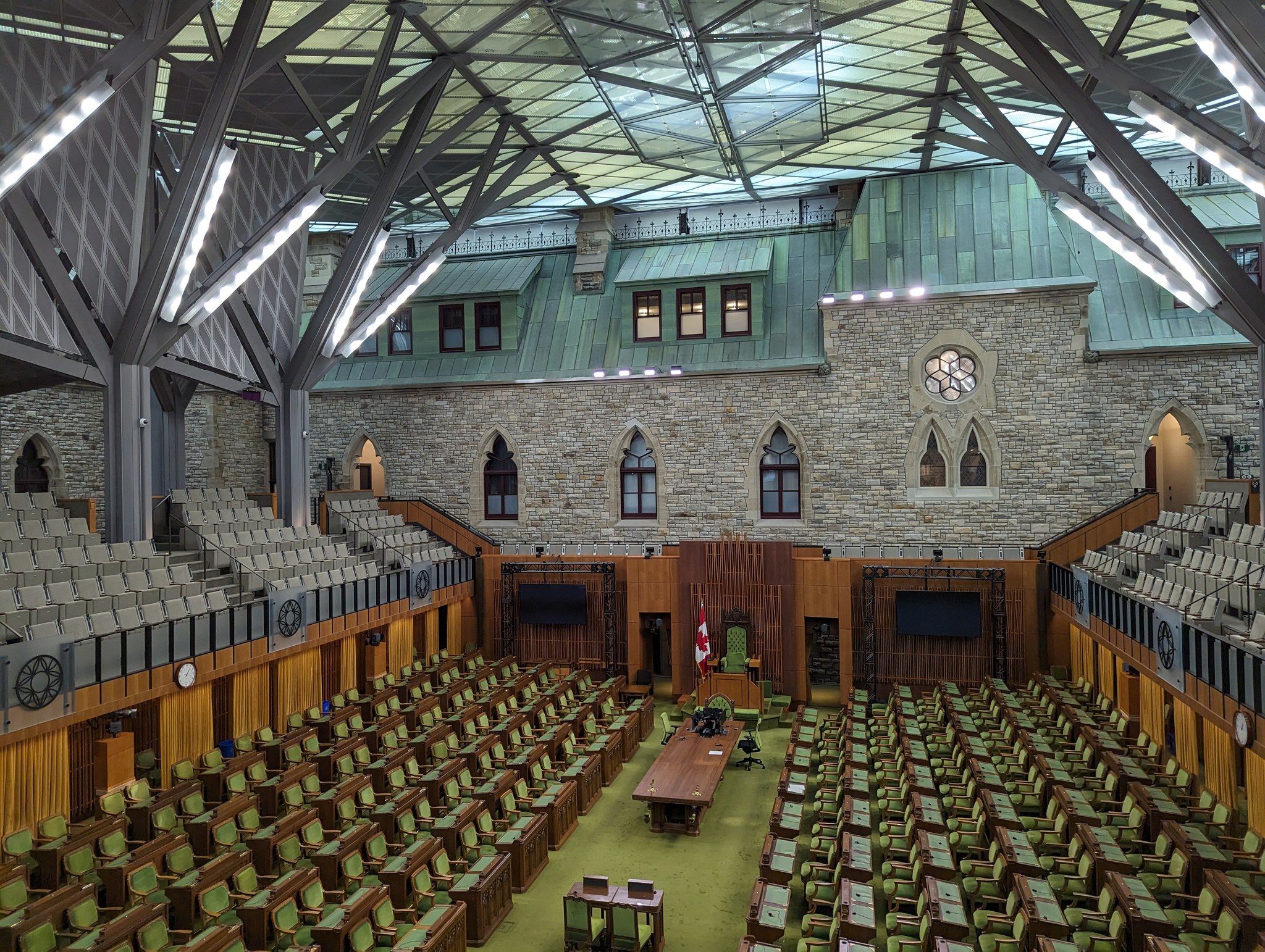
Featured photo: The Senate wing of the U.S. Capitol, home of the Senate chamber, September 2024. Photo: Bernini123 / Wikimedia Commons, CC0 1.0 (cropped).
Henry Calloway covers Congress and its Indian affairs committees for Tewatati.