By Henry Calloway, Tewatati
The Senate Committee on Indian Affairs voted Wednesday to send the Akwesasne Mohawk land claim settlement to the full Senate. The deal would return about 3,500 acres to reservation status for the Saint Regis Mohawk Tribe. A traditional Mohawk council has asked Congress to stop it, or at least pause it.
The committee “ordered favorably reported” both versions of the bill at its Nov. 18 business meeting in Room 628 of the Dirksen Senate Office Building, according to the Senate’s Daily Digest for that day. One is Sen. Kirsten Gillibrand’s S. 3475. The other is Rep. Elise Stefanik’s H.R. 2916, which the House passed on Dec. 9, 2025. Congress.gov records the committee’s action on S. 3475 as “Ordered to be reported without amendment favorably.” The Daily Digest does not give a vote count.
The House has already passed H.R. 2916, so if the Senate passes that bill unchanged it goes straight to the president. As of Sunday, Congress.gov still showed Wednesday’s committee vote as the latest action on S. 3475.
The Saint Regis Mohawk Tribe released a statement the same afternoon. “This milestone reflects years of steady work by many, to bring lasting resolution for our people,” the Tribal Council said. “As the legislation moves to the full Senate, we remain focused on securing final approval that will benefit our community for generations.” The Tribe said its council had attended the committee’s June hearing and later sent more information that the committee requested.
In Malone, Franklin County legislators gave an update on the land claim Thursday morning, the Malone Telegram reported. Legislator Don Dabiew, D-Bombay, said it had advanced through the committee after Wednesday’s session.
What the settlement would do
The Saint Regis Mohawk Tribe and the Mohawk Council of Akwesasne signed the agreement with New York State, Franklin and St. Lawrence counties, the towns of Fort Covington and Bombay, and the New York Power Authority (NYPA). Congress has to ratify it.
According to the House Natural Resources Committee’s report on H.R. 2916, about 3,500 acres would return to reservation status, including the Hogansburg Triangle. The Tribe could buy up to 14,000 more acres from willing sellers. Tuition and mandatory fees would be waived for Akwesasne Mohawk students at State University of New York schools. The Tribe would get 9 megawatts of NYPA power at a preferred rate. The report says the settlement requires no federal money.
The Mohawk Council of Akwesasne, on the Canadian side, lists further terms: $70 million from NYPA over 35 years, or $2 million a year, divided between the two councils. Akwesasne Mohawks would also gain rights to fish and gather on Barnhart, Croil and Long Sault islands in the St. Lawrence River, and to hunt and trap there, with some limits on Barnhart. The Mohawk Council said the agreement was signed again on June 23, 2025, after the Mohawk Nation Council of Chiefs withdrew from the process.
According to the Congressional Research Service summary, the bill would also ratify past land transfers named in the litigation. It would recognize as Indian country any land the Tribe owns or later acquires within the settlement acquisition areas.

The objection
The Kanien’kehá:ka Mohawk Nation Council, which describes itself as titleholders in the Haudenosaunee Confederacy, made its position clear in a July 28 statement.
“S.3475 must be opposed. At minimum, it must be paused, and if it is ever to move forward, it must be substantially amended,” the council said. It said no settlement should be passed without “the full, free, prior, informed, and culturally legitimate consent of all affected Kanien’kehá:ka-Mohawk people and all affected Kanien’kehá:ka-Mohawk governance systems.”
“We are not the Saint Regis Mohawk Tribe or Mohawk Council of Akwesasne,” the statement said. The council called those bodies organizations “created by New York State and Canada.” It said it had documented “the support of over 1,000 people from five clans within Akwesasne to stop this agreement,” and that the secrecy required during the talks kept participants from bringing the terms to their clans in time. Without proof of the agreement’s legitimacy, it said, “this bill is not reconciliation, it is not justice. It is erasure.”
As of Sunday, the council’s website listed no statement newer than July 28.
Questions from June
The committee heard the bill on June 3. Chairman Lisa Murkowski, R-Alaska, asked Bureau of Indian Affairs Director Bryan Mercier about the Mohawk Nation Council of Chiefs’ withdrawal, North Country Public Radio reported.
“Does withdrawing from this settlement create any risks about implementation or future claims, or concern about the settlement overall?” Murkowski asked. Mercier said he could not speak to that point in particular but that the agency was “open to further conversations.” He said the BIA had not yet taken a position on the settlement, according to the station.
Gillibrand told NCPR in a texted statement at the time: “The Tribe deserves swift action after more than 40 years of tireless advocacy.”
The committee approved S. 3475 without amendment, Congress.gov shows, so its text did not change after the June hearing.

Also on Wednesday’s list
The committee also ordered six other bills reported, the Daily Digest shows:
- S. 3573 (Luján) changes completion dates for the Aamodt settlement’s regional water system in New Mexico.
- S. 3859 and H.R. 4463 deal with future membership in the Catawba Indian Nation.
- S. 4053 and H.R. 5682 would take land in California into trust for the Pechanga Band of Indians.
- H.R. 226 would take federal land in Tennessee into trust for the Eastern Band of Cherokee Indians.
It was the committee’s first meeting since the midterm elections, Indianz.com reported. Another land transfer, for the Confederated Tribes of Grand Ronde, was the subject of Tewatati’s Nov. 17 preview of a House hearing.
Requests for comment
Neither the Saint Regis Mohawk Tribe’s communications office nor the Mohawk Council of Akwesasne’s Akwesasne Rights and Research Office responded to a request for comment by publication time. Neither did the Kanien’kehá:ka Mohawk Nation Council, Gillibrand’s office, or the press offices of Murkowski and Vice Chairman Brian Schatz, D-Hawaii. A request sent to an address published for the Mohawk Nation Council of Chiefs was returned as undeliverable.
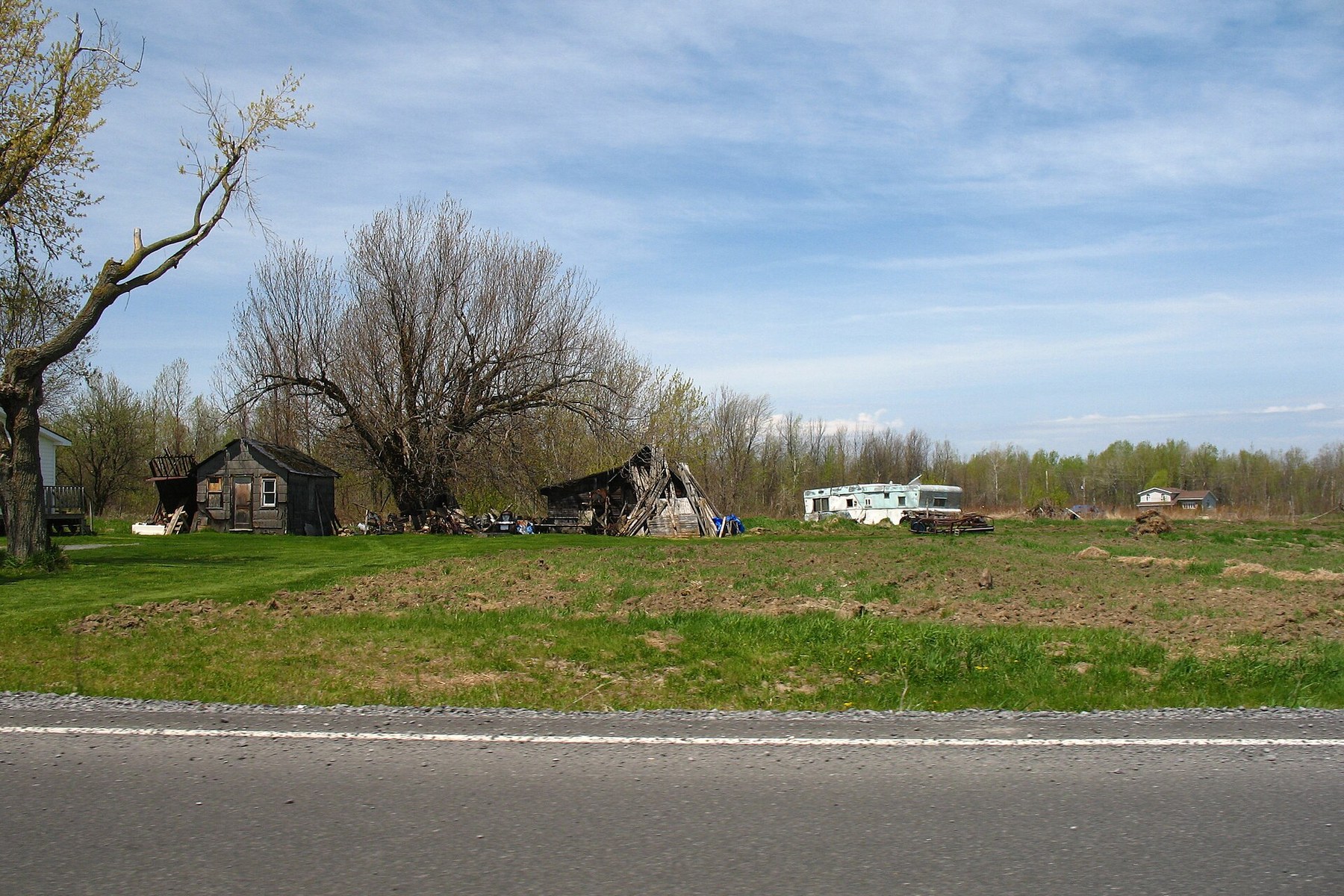
Featured photo: A roadside view in Akwesasne, May 2007. Photo: Jon Evans, CC BY 2.0, via Wikimedia Commons (cropped).
Henry Calloway covers Congress and its Indian affairs committees for Tewatati.