By Victoria Hale, Tewatati
A Navajo Nation Council committee is set to take up a bill on Monday that would keep the Nation’s president, vice president and Council delegates off the boards that run its enterprises, both while they hold office and for four years after they leave.
Legislation 0291-26 is item 7(c) on the agenda for the Law and Order Committee’s regular meeting at 10 a.m. Monday, Nov. 23, at the Iyanbito Chapter House in New Mexico. The agenda lists it as eligible for action that day, and like every committee agenda it is subject to change until members adopt it.
The timing gives the bill an edge. By unofficial results, the 26th Council that takes office in January could include 16 members who do not serve now, the Navajo Times reported Nov. 5. President Buu Nygren finished third in the primary and leaves office in January. If the bill becomes law, every departing official would start a four-year wait before taking a seat on a Navajo enterprise board.
What the bill would do
Delegate Dr. Andy Nez sponsors the bill, which was posted for public comment on Nov. 17. It would add a new Section 3759 to the Navajo Nation Ethics in Government Law. The ban covers “any enterprise, authority, industry, corporation, company, limited liability company, commission, board, or other entity” the Council or its committees created, own or control. That includes the enterprises in Title 5, the Navajo Tribal Utility Authority (NTUA), the Navajo Housing Authority and the Navajo Transitional Energy Company (NTEC).
Chapters, Council bodies, intergovernmental bodies, elected boards and purely advisory panels are left out.
Under the bill:
- An appointment or confirmation that breaks the rule is void, and a board member who becomes ineligible is “deemed removed.”
- Every nominee must certify in writing that he or she is eligible.
- A board member who wins office must resign before taking the oath.
- Seats that the law reserves for sitting officials, such as ex officio seats, can remain, but each one ends when its holder leaves office.
- Members already serving may finish their terms but cannot be reappointed during their four-year restricted period.
NTEC and the Navajo Housing Authority would have 90 days to bring their governing documents into line. Federally chartered entities, such as the Navajo Nation Oil and Gas Company, would be covered only after their charters are amended. The Navajo Nation Department of Justice would have 180 days to draft those amendments.
The bill’s findings explain its purpose. Officials “appoint, confirm, fund, and legislate for” these boards, it says, and naming one of them shortly after he or she leaves office “creates, at a minimum, the appearance that board service is available as a reward for political relationships formed in office, and it limits the opportunity for other qualified Navajo People to serve.” The bill says four years matches one full term of office.

Who holds the seats now
The findings also say some boards already bar sitting officials, including the Navajo Agricultural Products Industry and the two gaming enterprises, but those limits end the day an official leaves office. The rules for the Navajo Engineering and Construction Authority and NTUA, it says, “contain no comparable restriction.”
The bill would also change the Navajo Arts and Crafts Enterprise board, which includes a seat for a sitting Council delegate. Under the amendment, that membership would end when the delegate leaves office. The Council’s April 2026 assignment list shows Delegate Shawna Ann Claw in that seat.
Nez holds the kind of seat the bill would leave in place for sitting officials. Since May he has been the Council’s ex officio member of the Diné College Board of Regents, under a resolution that says the seat goes to a current delegate and lasts as long as his tenure on the Council.
Two of the enterprises the bill names told Tewatati it would change nothing for them.
“The proposed amendment in the legislation is superfluous with respect to NTEC,” the company’s media office said in a statement. “NTEC’s board does not contain any public officials, and the proposed prohibition has been a part of NTEC’s Operating Agreement since inception.”
NTUA “has no position on the proposed legislation,” said Deenise Becenti, who handles government and public affairs in the utility’s general manager’s office. NTUA has a seven-member management board, six of whom are Navajo Nation tribal members, and the Council’s Resources and Development Committee appoints all of them, she said. No former president, vice president or delegate serves on it now, she said. “There would be no change as there are no elected tribal leaders serving on the Management Board,” she wrote.
Appointments to other boards run through the Council’s committees too. For the Navajo Nation Gaming Enterprise, the president selects board members and the Naabik’íyáti’ Committee confirms them, as a March 2026 confirmation shows.

A week of transitions
The committee will take up the bill as the Nation heads toward January with its leadership unsettled. Speaker Crystalyne Curley and running mate Christopher Deschene lead Justin Jones and Emily Ellison 32,094 votes to 30,979 in unofficial results. Jones has requested a recount, the Navajo Times reported Nov. 12. “The people have spoken. There’s no legitimate reason for a recount,” Curley told the paper in a text message.
The Navajo Board of Election Supervisors has scheduled a special meeting for 9 a.m. MST Tuesday, Nov. 24, in Window Rock.
The Law and Order Committee’s vote would be the first of four. The Council’s tracking system routes the bill next to the Resources and Development Committee and the Naabik’íyáti’ Committee, with the full Council holding final authority by simple majority. On Sunday, the tracker listed the bill’s status as “5 Day Hold,” last updated Nov. 18.
The Resources and Development Committee, which oversees the Nation’s enterprises, also meets Monday, at the Four Corners Power Plant. Its agenda includes a report from Navajo Housing Authority leaders but does not list 0291-26.
The same Council has already put pay before voters. Tewatati reported in October on the delegate pay referendum, Legislation 0232-26.
Comments on 0291-26 can be emailed to comments@navajo-nsn.gov. The Council’s legislation page posts each bill as it is introduced.
Nez did not respond to a request for comment by publication time. Neither did the Office of the Speaker, Law and Order Committee Chair Eugenia Charles-Newton, Resources and Development Committee Chair Brenda Jesus, or the University of Arizona’s Udall Center, which houses the Native Nations Institute. A request sent to the Navajo Nation Gaming Enterprise’s published email address was rejected as undeliverable.
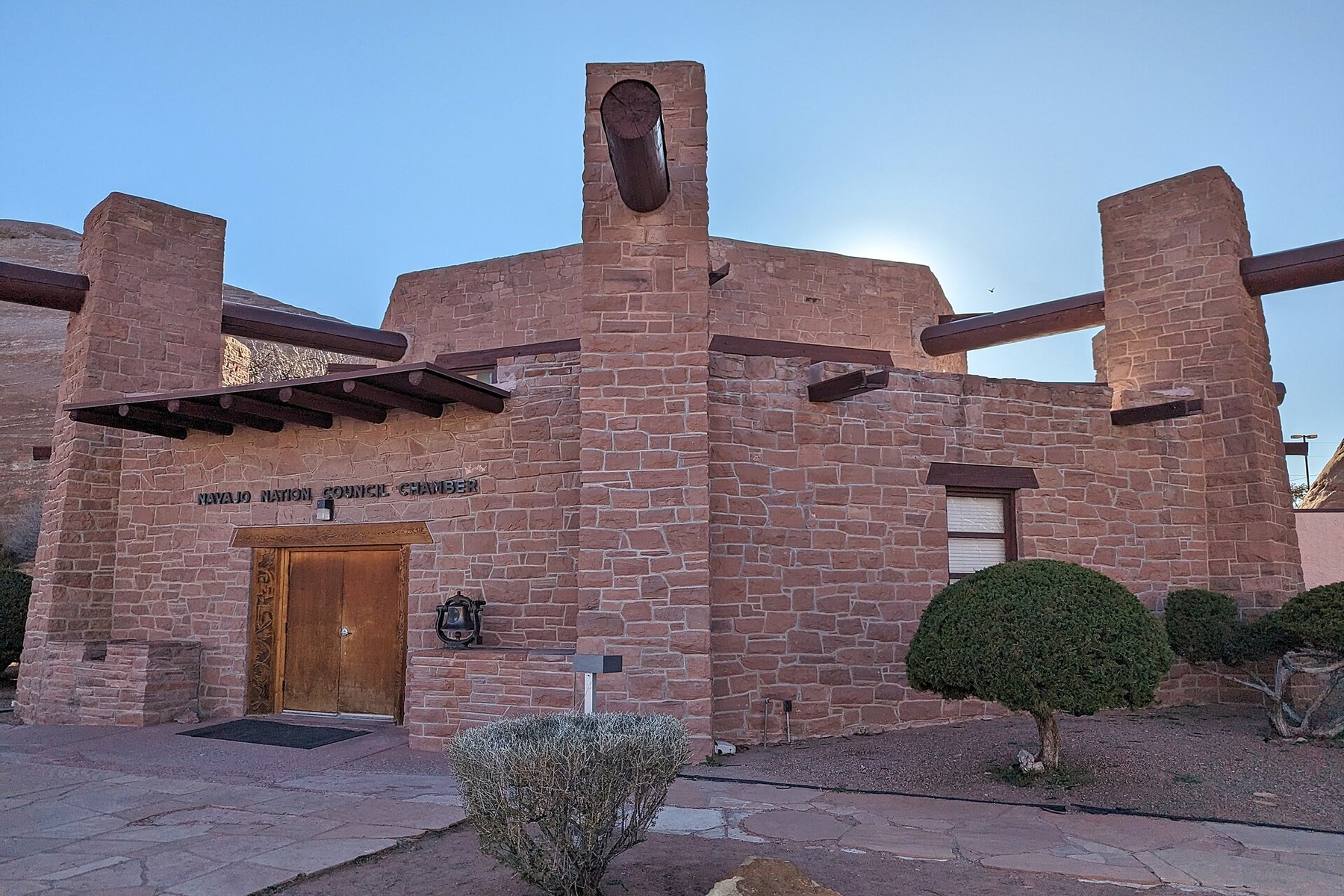
Featured photo: The Navajo Nation Council Chamber in Window Rock, Ariz., April 2024. Photo: SounderBruce, CC BY-SA 4.0, via Wikimedia Commons (cropped).
Victoria Hale covers power, wealth and leadership in Indian Country for Tewatati.