By Elena Marsh, Tewatati
Three California tribes are pressing their case against the prediction market Kalshi and its broker partner Robinhood in federal court. At issue is whether Kalshi can keep sports event contracts off tribal lands with a digital fence.
Blue Lake Rancheria and Chicken Ranch Rancheria of Me-Wuk Indians sued in 2025. On Oct. 21, U.S. District Judge Jacqueline Scott Corley in San Francisco granted their motion to add Buena Vista Rancheria of Me-Wuk Indians as a plaintiff. She also granted the tribes’ planned request to amend their complaint and terminated the defendants’ motions to dismiss without prejudice.
Corley also ordered the parties to “meet and confer to discuss a potential stipulation on geofencing.” She set a case management conference for 2 p.m. Pacific on Wednesday, Nov. 4, with a joint statement due at noon on Nov. 3.
Her order sets the amended complaint deadline as Nov. 4. A separate minute entry on the docket lists Nov. 14. No filings after Oct. 21 appear on the public docket.

What the Ninth Circuit decided
The case is back in district court after the tribes won at the U.S. Court of Appeals for the Ninth Circuit. On Sept. 16, a panel of Chief Judge Mary H. Murguia and Judges M. Margaret McKeown and Richard A. Paez reversed the district court’s denial of a preliminary injunction. McKeown wrote the opinion.
“We reverse the denial of the preliminary injunction because the Tribes are likely to succeed in their claims that Kalshi’s event contracts on tribal lands violate IGRA and the Tribes’ gaming ordinances,” the court wrote.
The panel held that:
- The sports event contracts are likely class III gaming under the Indian Gaming Regulatory Act (IGRA).
- The contracts are “located on Indian lands” when users enter into them from tribal territory.
- The Unlawful Internet Gambling Enforcement Act does not displace IGRA, and the Commodity Exchange Act’s “exclusive” jurisdiction does not extend to Kalshi’s sports event contracts.
The panel affirmed the lower court on the tribes’ Lanham Act claim and sent the case back for the district court to weigh the remaining injunction factors.

A geofence, and a test
The parties’ Oct. 14 joint status report sets out the fight over enforcement.
Kalshi says that after the Ninth Circuit ruling it “has taken reasonable measures, working with a well-known third-party provider (GeoComply), to geofence Plaintiffs’ tribal lands.” It argues that this makes the tribes’ preliminary injunction motion moot. It said it would file a sworn company affidavit describing the measures.
The tribes say they first learned of the geofencing at a court hearing. After that, they say, “a member of the Blue Lake Rancheria Gaming Commission placed a ‘bet’ on the Kalshi App while on the Blue Lake Rancheria.” Kalshi says the tribes’ counsel first raised an issue on Oct. 2, then said on Oct. 7 that the trade happened on Oct. 2. Kalshi says it is discussing the issue with GeoComply.
The tribes want a court order that lets them independently verify the geofence and that they can enforce, including through contempt. Without such an order, they want a new preliminary injunction hearing.
They also plan to add IGRA, gaming ordinance and compact claims against Robinhood. They wrote that they “now have evidence that shows that FCM’s are central to the operation of a Designated Contract Market (DCM) like Kalshi.” FCMs are futures commission merchants such as Robinhood. The tribes then intend to seek partial summary judgment.
Sovereignty on both sides
The split in Indian Country is now out in the open.
On Oct. 7, Kalshi announced partnerships with four tribes:
- Alabama-Quassarte Tribal Town in Oklahoma.
- Greenville Rancheria in California.
- Kletsel Dehe Wintun Nation in California, through its economic development authority.
- Alturas Indian Rancheria in California.
Under the deals, each tribe owns its own app, and Kalshi runs the exchange underneath.

“Geography has kept many tribes from sharing in the prosperity that gaming created,” Alabama-Quassarte Chief Wilson Yargee said in Kalshi’s announcement. “We will respect every other tribe’s authority on its land, and we expect the same respect for our authority to make this decision.” Michael Stopp, the Tribal Town’s vice president of economic development and a Cherokee Nation citizen, said in the same post: “Sovereignty cannot mean protecting opportunity for the haves while closing the door on the have-nots.”
The California Nations Indian Gaming Association, a nonprofit association of 58 federally recognized tribal governments, answered the next day in a statement. It called the deals “disappointing, but it doesn’t change the fact that this activity is still illegal.” “Whoever offers the sports betting contract is irrelevant,” the statement said. “CNIGA respects every Tribal Nation’s sovereign right,” it added, “but the decisions of a few outlier tribes should not come at the expense of another tribe’s sovereign rights.”
At the Supreme Court
The fight is also before the U.S. Supreme Court. As Tewatati reported Oct. 19, 145 tribes and tribal organizations filed a brief urging the justices to hear New Jersey’s petition in Flaherty v. KalshiEX. Kalshi’s response to the petition had been due Nov. 9. On Oct. 30, the Court granted Kalshi a further extension to Dec. 7, according to the docket. The extension pushes back when the justices can take up the petition.
Comment
The California Nations Indian Gaming Association offered a phone interview with Chairman James Siva but did not provide a written comment. Kalshi, Blue Lake Rancheria, Chicken Ranch Rancheria, Buena Vista Rancheria, the tribes’ attorney Lester J. Marston, Alabama-Quassarte Tribal Town and Kletsel Dehe Wintun Nation did not respond to a request for comment by publication time.
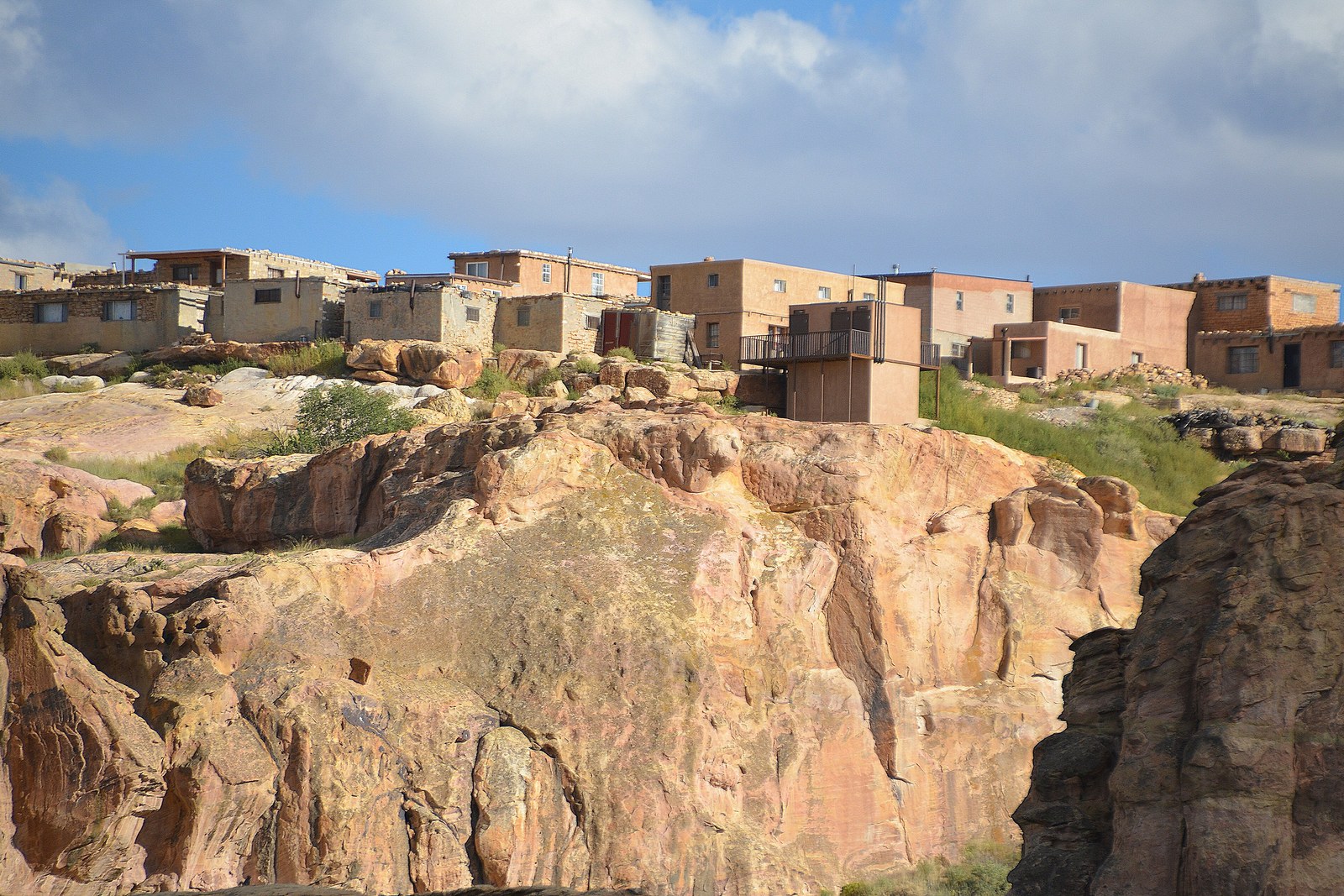
Chicken Ranch Casino in Jamestown, California, July 2024. Chicken Ranch Rancheria of Me-Wuk Indians is a plaintiff in the case against Kalshi. Photo: TreaderUltra / Wikimedia Commons, CC BY 4.0 (cropped and resized).
Elena Marsh covers sovereignty and nation building for Tewatati.